20 Embedded Systems Examples and How They Work
Explore real-world embedded systems in home appliances, vehicles, industrial equipment, communication devices, and more—and learn how inputs, processors, firmware, and outputs work together.
What Is an Embedded System?
An embedded system is a computer-based system designed to perform a dedicated function as part of a larger product or machine. Although embedded systems vary greatly in complexity, most can be simplified into four basic elements:
- Inputs: Buttons, switches, sensors, communication signals, or other information entering the system.
- Processor: Usually a microcontroller or microprocessor that executes the embedded program.
- Firmware: Software containing the rules and logic that determine how the system behaves.
- Outputs: LEDs, motors, relays, displays, speakers, valves, communication signals, and other devices controlled by the processor.
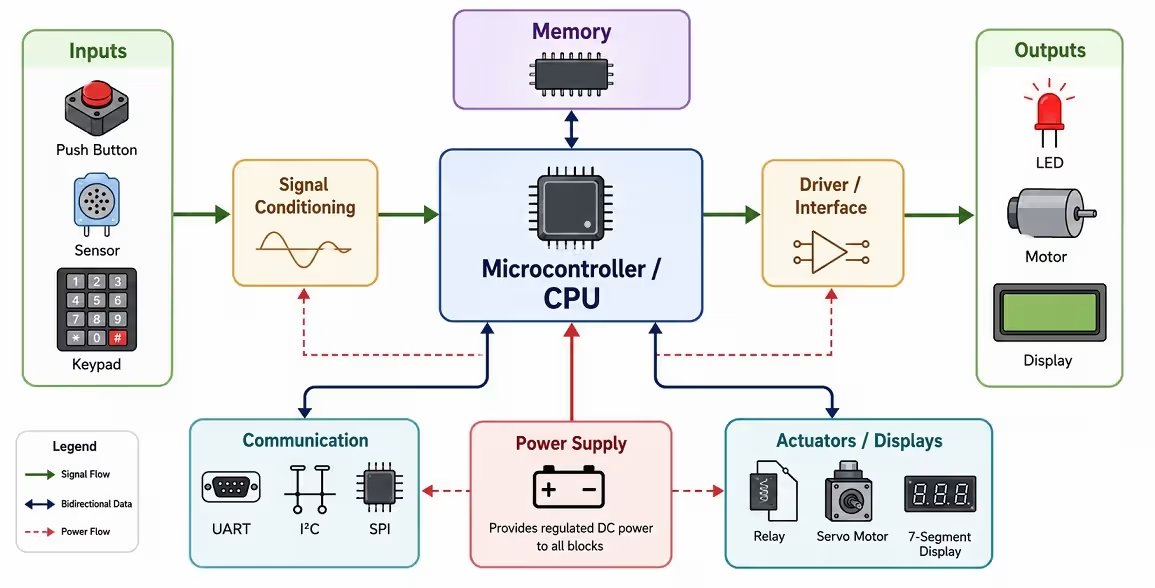
More advanced systems may contain several processors, dozens of sensors, communication networks, operating systems, and many different outputs. However, the same input-processing-output concept still applies.
20 Examples of Embedded Systems
The following examples show how embedded systems appear in everyday, automotive, industrial, medical, and consumer applications.
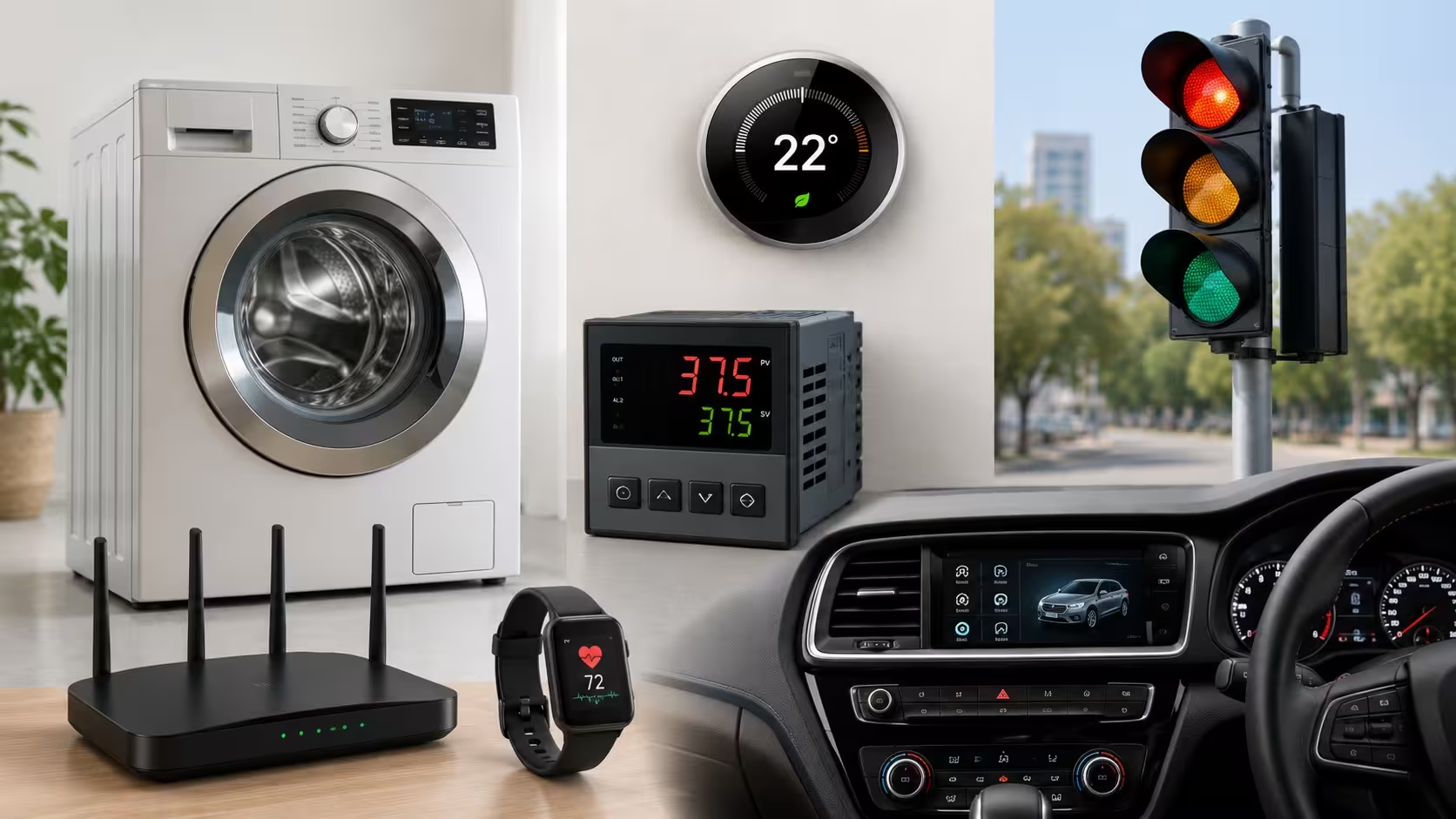
1. Washing Machine
A modern washing machine is a good example of an embedded system because its controller must coordinate a sequence of operations rather than simply switch a motor on and off.
The controller may read inputs from:
- door or lid switches
- water-level sensors
- temperature sensors
- control-panel buttons
It may then control outputs such as:
- water inlet valves
- the drum motor
- the drain pump
- the water heater
- the display and indicator lights
The firmware determines when each operation occurs and ensures that the machine follows the selected washing program safely.
2. Microwave Oven
A microwave oven contains an embedded controller that manages cooking time, keypad input, the display, internal lighting, the fan, and the microwave-generating circuitry. When the user presses buttons on the keypad, the embedded controller interprets the commands, starts a timer, controls the required outputs, and updates the display. Door switches also provide important safety inputs. If the door opens during operation, the controller must immediately stop microwave generation.
3. Digital Thermostat
A digital thermostat is a relatively simple example of an embedded control system.
The controller repeatedly measures room temperature and compares it with the temperature selected by the user. If the measured temperature falls outside the desired range, the controller activates heating or cooling equipment.
4. Traffic Light Controller
A traffic light controller is especially useful for understanding embedded programming because its behavior can be represented as a sequence of states. A basic controller might repeatedly cycle through:
- green
- yellow
- red
- green again
The embedded controller keeps track of time and changes the outputs at predetermined intervals. More advanced systems may also read pedestrian buttons, vehicle sensors, emergency signals, and data from nearby intersections.
5. Digital Alarm Clock
A digital alarm clock uses an embedded controller to keep track of time, read buttons, update the display, and activate an alarm. The system may obtain its timing reference from a crystal oscillator or a dedicated real-time clock circuit. The firmware continuously updates the displayed time and compares the current time with the programmed alarm time.
6. Automobile Engine Control Unit
Modern vehicles contain many embedded systems. One of the most important is the engine control unit, or ECU. An ECU receives information from sensors that monitor values such as:
- engine speed
- engine temperature
- throttle position
- air pressure or airflow
- oxygen concentration in the exhaust
The controller processes these measurements and adjusts outputs such as fuel injection and ignition timing. Although an ECU is much more complex than a simple microcontroller project, it still follows the same pattern of reading inputs, executing control logic, and producing outputs.
7. Anti-Lock Braking System
An anti-lock braking system, or ABS, uses wheel-speed sensors to detect whether one or more wheels are approaching lockup during braking. The embedded controller processes this information and rapidly adjusts braking pressure when necessary. ABS is an example of a real-time embedded system because the controller must respond to changing conditions within a limited amount of time.
8. Airbag Controller
A vehicle airbag controller monitors acceleration and impact-related sensors. If the system detects conditions associated with a serious collision, it determines whether the airbags should be deployed. This type of application demonstrates the importance of reliability, testing, and predictable timing in safety-critical embedded systems.
9. Printer
A printer contains embedded controllers responsible for receiving print data, controlling motors, detecting paper, positioning the print mechanism, and communicating with a computer or network. Even relatively inexpensive printers may contain more than one processor dedicated to different parts of the system.
10. Wi-Fi Router
A Wi-Fi router is another example of an embedded computer system, although it is considerably more powerful than a small microcontroller application. Its processor may perform tasks such as:
- routing network packets
- managing wireless connections
- providing firewall functions
- assigning network addresses
- running a web-based configuration interface
Devices such as routers often run an embedded operating system rather than a small standalone firmware loop.
11. Digital Camera
A digital camera uses embedded processors to read an image sensor, process photographs, operate autofocus, control exposure, manage buttons, display menus, and save images to storage. More advanced cameras may contain several processors or dedicated hardware for high-speed image and video processing.
12. Television Remote Control
A television remote control is a simple battery-powered embedded system. When a user presses a button, the microcontroller detects the key and generates the corresponding infrared command. Because the device spends most of its time waiting for input, its processor can remain in a low-power state and wake only when necessary.
13. Elevator Controller
An elevator uses embedded controllers to coordinate floor requests, door operation, motor movement, position sensing, and safety systems. The controller decides where the elevator should move while making sure that the doors and other mechanisms operate safely. Elevator operation can also be represented using states such as idle, moving upward, moving downward, opening doors, and closing doors.
14. Vending Machine
A vending machine contains an embedded controller that reads payment inputs, tracks customer credit, processes selections, controls dispensing motors, and updates the display. A simplified sequence might be:
- wait for payment
- record the available credit
- wait for a product selection
- check whether enough credit is available
- activate the appropriate dispenser
- return to the waiting state
15. Electronic Door Lock
An electronic door lock may use a keypad, RFID reader, fingerprint sensor, Bluetooth connection, or another input method. The embedded controller checks the supplied credentials and activates a solenoid or motor when access is authorized. More advanced systems can add alarms, access logs, network communication, and battery monitoring.
16. Smoke Detector
An electronic smoke detector continuously monitors a sensing element for conditions that may indicate smoke or fire. The embedded controller can process the sensor signal, detect an alarm condition, monitor battery status, and activate an audible warning.
17. Fitness Tracker
A fitness tracker combines several embedded-system components in a very small device. Depending on the model, it may contain:
- an accelerometer
- a heart-rate sensor
- a display
- Bluetooth communication
- flash memory
- a low-power microcontroller
Power consumption is particularly important because the system must operate for long periods from a small battery.
18. Pacemaker
A pacemaker is a specialized medical embedded system that monitors electrical activity in the heart and provides carefully controlled electrical stimulation when necessary. Medical embedded systems place extremely high demands on reliability, energy efficiency, testing, and safety.
19. Industrial Temperature Controller
An industrial temperature controller reads a sensor such as a thermocouple or RTD and controls heating or cooling equipment to maintain a desired temperature. The controller may use simple on/off control or a more advanced control method such as PID. These systems are commonly found in ovens, manufacturing equipment, process-control systems, and laboratory instruments.
20. Microcontroller-Based LED Controller
One of the simplest embedded systems you can build is an LED controller. Consider a circuit containing:
- a push button
- a PIC microcontroller
- an LED
The push button provides the input. The PIC microcontroller executes the program logic. The LED provides the output.
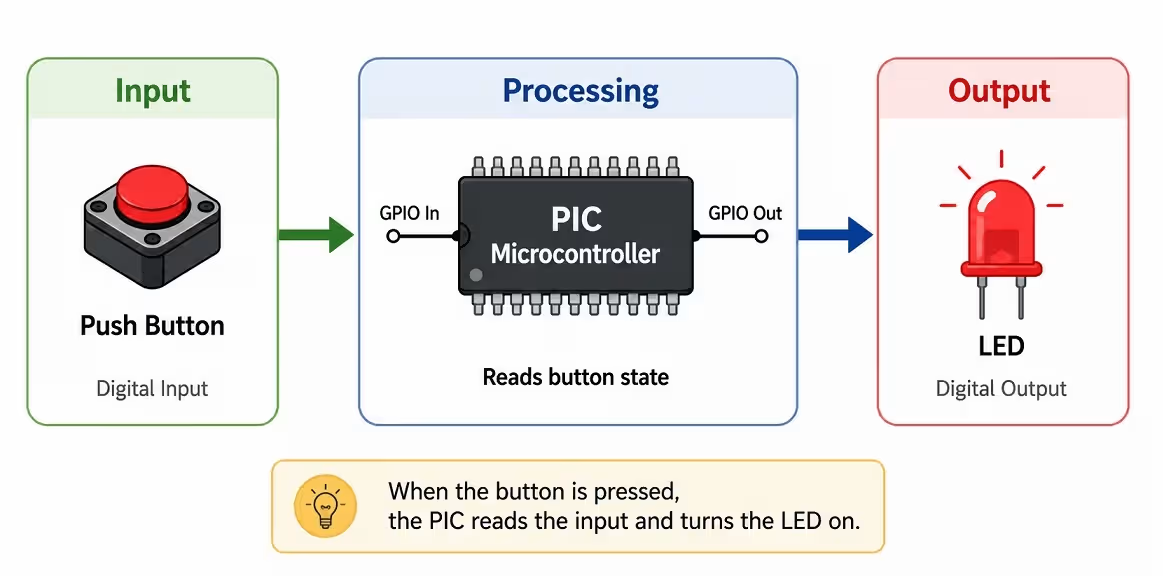
This example is much simpler than a washing machine or automotive controller, but it contains the same fundamental components found in larger embedded systems.
A Simple Embedded System Using a PIC Microcontroller
Many of the embedded systems described above can be reduced to the same basic architecture:
Suppose a push button is connected to one input pin of a PIC microcontroller and an LED is connected to an output pin. The program repeatedly checks the input. When the state of the button changes, the firmware changes the state of the LED output. This small project introduces several important embedded concepts:
- digital inputs
- digital outputs
- microcontroller registers
- program loops
- conditional instructions
- hardware and software interaction
Once these concepts are understood, the same principles can be applied to increasingly complex embedded systems.
Try a Simple Embedded System Without Hardware
You do not necessarily need a physical development board to experiment with the basic concepts behind an embedded system. PIC Simulator allows you to write, assemble, and execute PIC assembly programs directly in your browser. You can use the simulator to:
- step through PIC instructions
- inspect register values
- monitor memory
- control simulated GPIO inputs
- observe output pins
- experiment with LEDs and switches
- test seven-segment displays
- experiment with interrupts and timers
Embedded Systems vs General-Purpose Computers
The main difference between an embedded system and a general-purpose computer is the intended purpose of the system. A desktop or laptop computer is designed to run many unrelated programs. The same machine might run a browser, spreadsheet, game, development environment, and media player. An embedded computer is normally designed around the needs of a particular product. For example, the processor inside a washing machine does not need to run a web browser or spreadsheet application. Its firmware is designed specifically to control the washing machine. Embedded systems are often optimized for:
- low cost
- small physical size
- low power consumption
- fast response
- reliability
- real-time operation
- specific hardware interfaces
Common Components of Embedded Systems
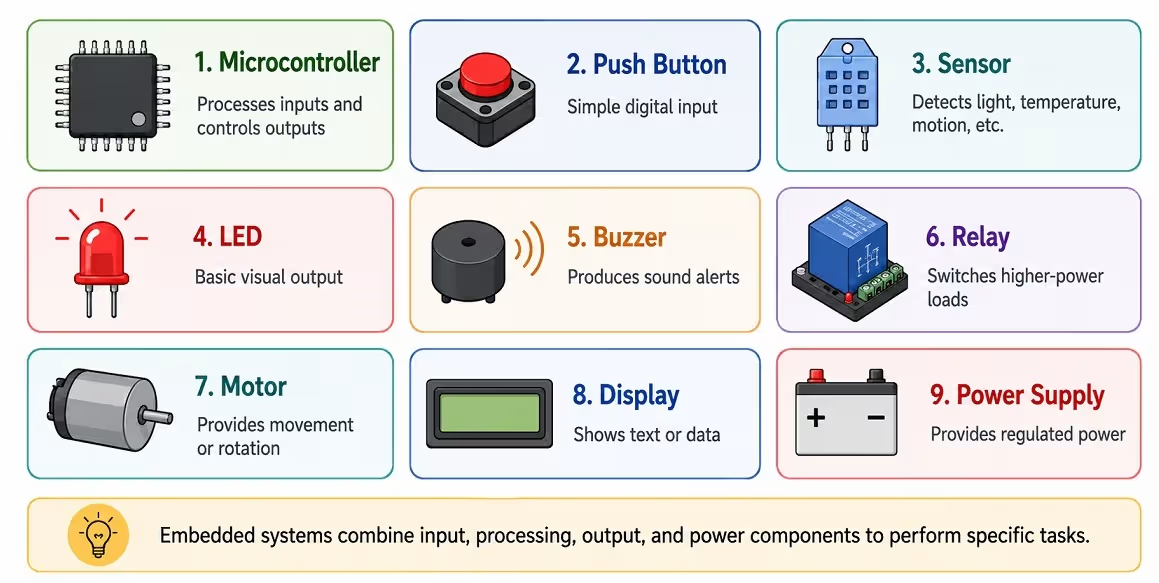
Although embedded systems can perform very different jobs, many contain the same types of hardware and software components.
Microcontroller or Processor
The processor executes the embedded software and coordinates the other components of the system. Smaller systems often use a microcontroller containing a CPU, memory, timers, GPIO, and communication peripherals inside one integrated circuit.
Memory
Program memory stores the firmware that the processor executes. RAM stores temporary variables and system state while the program runs.
Sensors and Inputs
Inputs allow an embedded system to detect conditions in the outside world or receive commands from users and other electronic systems.
Examples include:
- push buttons
- temperature sensors
- pressure sensors
- light sensors
- motion sensors
- switches
- communication interfaces
Outputs and Actuators
Outputs allow the embedded controller to affect the physical world. Common outputs include:
- LEDs
- motors
- relays
- heaters
- valves
- buzzers
- LCD and LED displays
Communication Interfaces
Many embedded systems exchange data with other devices. Common interfaces include:
- UART
- SPI
- I2C
- USB
- CAN
- Ethernet
- Wi-Fi
- Bluetooth
Firmware
Firmware is the software stored inside the embedded device. It defines how the processor reads inputs, performs calculations, responds to events, communicates with peripherals, and controls outputs.
Learning Embedded Systems with Simple Examples
The easiest way to learn embedded systems is usually to begin with small projects and introduce one new concept at a time. A useful learning sequence is:
- blink an LED
- read a push button
- control an LED from a button
- generate delays
- use a hardware timer
- respond to an interrupt
- drive a seven-segment display
- communicate through a serial interface
- connect sensors and additional peripherals
Each project introduces concepts that also appear inside much larger real-world embedded systems.
Conclusion
Embedded systems range from tiny controllers performing one simple task to sophisticated automotive, networking, industrial, and medical systems. Despite these differences, most embedded systems follow the same basic pattern: they receive inputs, execute software on a processor, and produce outputs.
A washing machine, thermostat, traffic light, automobile controller, vending machine, and button-controlled LED may perform completely different jobs, but all can be understood using the same basic embedded-system principles. If you are beginning to learn embedded programming, experimenting with a simple microcontroller is one of the best ways to see these concepts in action.